Freedom to Step Away: How Owner-Independence Increases Enterprise Value
When most business owners picture “freedom” or “independence” they imagine a beach, a golf course, or an extended vacation. But real freedom doesn’t come from where you spend your time; rather, it comes from knowing your business can keep running even when you’re not there.
That peace of mind isn’t just good for your stress level. Buyers, bankers, and investors all put a premium on companies that don’t depend on one person to function. Independence lowers risk, increases predictability, and, in turn, raises enterprise value.
Owner independence matters
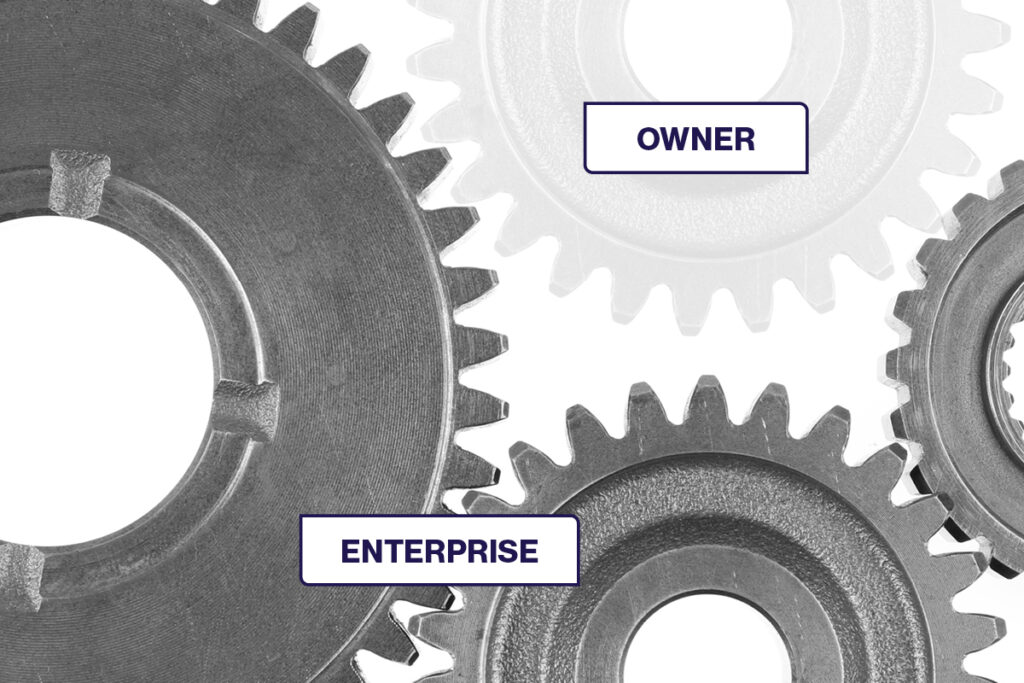
A business that runs on systems—not just the owner’s presence—is more transferable and therefore more valuable. When operations don’t grind to a halt waiting for approvals, when customers aren’t dependent on a single relationship, and when the “how-to” of the business doesn’t live inside a single person’s head, the business is far more resilient.
That resilience often shows up when life throws a curveball: an illness, an unexpected opportunity, or simply the need for time away. Companies with strong systems weather those disruptions without missing a beat. Just as important, when owners are no longer tied to every approval or emergency, they can focus on strategy, growth, and the bigger picture.
A quick self-check (be honest)
Think about your own business for a moment. Give yourself one point for each “yes” answer.
If you answered “yes” to two or more of these, you’re ready for a fix. So, how do we fix it? We suggest using the Owner Independence Framework to help you understand where your business is today.
The Owner Independence Framework
At Business Pulse, we use what we call the Owner Independence Framework to help owners shift from being the hub of everything to being the architect of sustainable systems. It starts with identifying your core business functions, such as sales, operations, finance, and customer service, and mapping out the purpose, outcomes, and decisions that can happen without you.
Here are 5 pieces of the Owner Independence Framework you can begin to use:
1) Process not People.
List the work your company must do (Sales, Ops, Finance, CS).
Under each, write: Purpose • Outcomes • Decisions you can make without me.
2) Minimum-Viable SOPs.
Capture the 8–12 revenue-critical processes on one page each:
Trigger → Steps → Owner → SLA → Tools → “Done” definition. Record once; refine later.
3) A cadence that runs without you.
Weekly: a 15-minute Scorecard (6–10 metrics) and a 20-minute Pipeline/Production check (owners + next actions).
If you miss it, the team still meets and reports results to the owner.
4) Outside perspective.
Quarterly advisory huddle (2–3 trusted operators) with a simple charter and decision lanes.
You’re building organizational memory.
5) Friday scorecard.
Update KPI’s in under 10 minutes:
Leads, Win rate, On-time delivery, Cycle time, Cash in/out, Backlog health, NPS.
Stay Ready, Increase Value
Owner-independence isn’t just about taking a vacation without worry. It’s about building a business that’s resilient, transferable, and ready for whatever comes next. When you stay ready, you not only create freedom for yourself, but you increase the value of what you’ve built.
Curious how owner-independence could move your number? Request Business Pulse’s complimentary valuation assessment. It’s a no-obligation review that highlights key risk factors, provides a practical value range, and outlines your top three priorities to increase enterprise value.